
All Heating & Cooling
Furnace repair that tests before it replaces
A furnace that won't ignite, short cycles, or blows cold air has a specific, identifiable cause. We find it before recommending a repair.
Email Us for a Free Estimate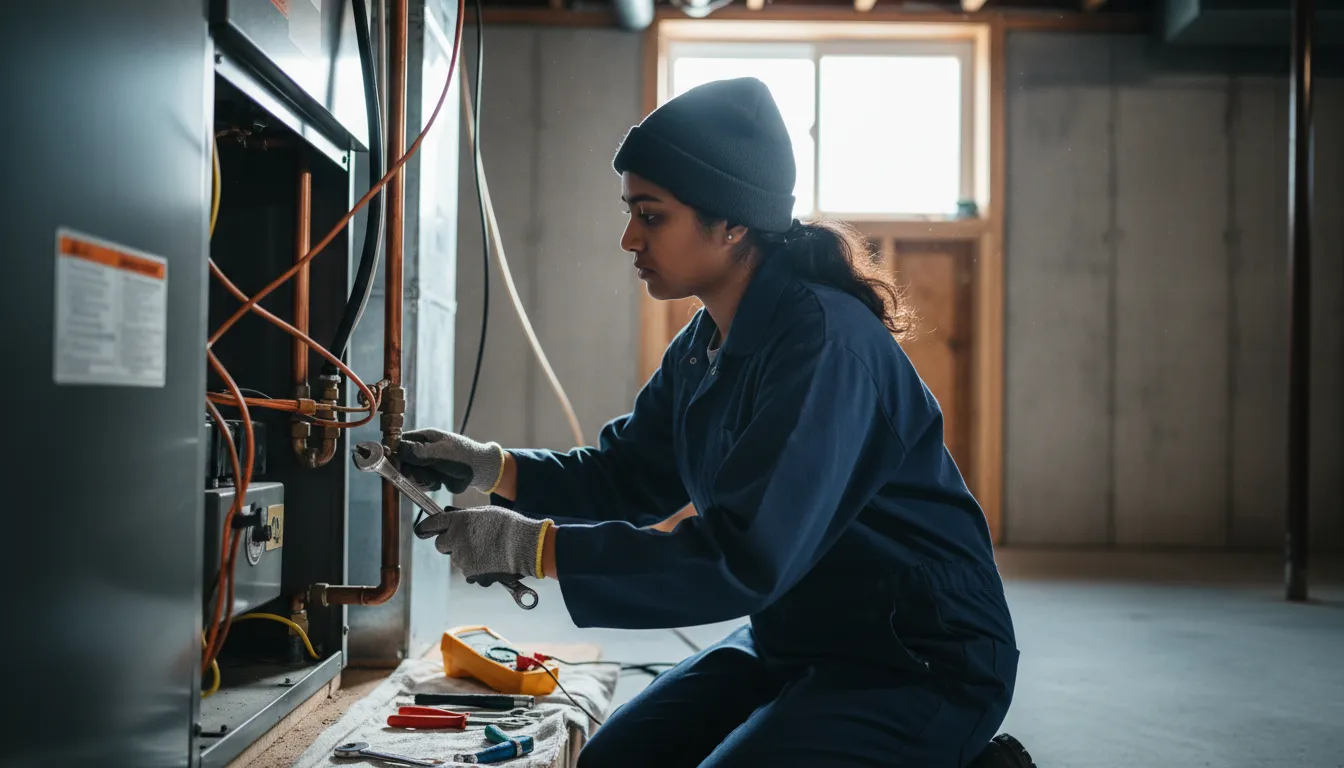
Why furnace failures show up in the coldest weeks
Furnaces in the GTA often run lightly through fall shoulder season, then get pushed to near-continuous operation once temperatures drop well below freezing. Marginal components tend to fail exactly at that point.
Ignition system failure
Hot surface igniters and flame sensors degrade with age and repeated heat cycles, and often fail to light the furnace reliably once run time increases in deep winter.
Blower motor wear
A failing blower motor or capacitor reduces airflow, which can trigger high-limit switches and shut the furnace down as a safety response.
Heat exchanger cracking
Thermal stress from repeated heating and cooling cycles can crack a heat exchanger over time, which is a safety issue we check on every repair, not an optional add-on.
Condensate line freezing
In unheated basement sections, condensate lines from high-efficiency furnaces can freeze during extreme cold, triggering a safety lockout.
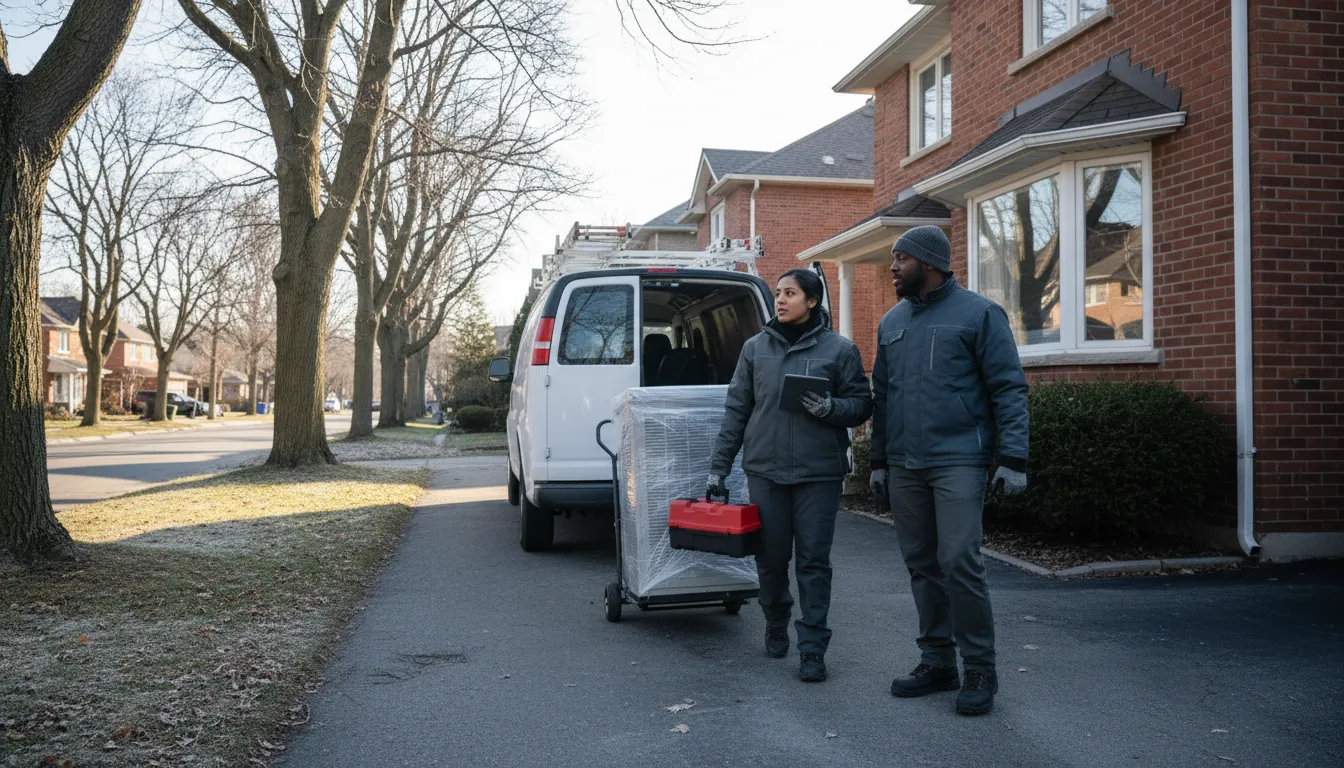
A furnace that short cycles is telling you something specific
Short cycling — where the furnace fires, runs briefly, and shuts off repeatedly — is often mistaken for a thermostat problem, but it's more commonly caused by restricted airflow, a failing flame sensor, or a high-limit switch responding to overheating. Left unaddressed, this pattern accelerates wear on the heat exchanger.
We isolate the trigger, not just reset the system
Resetting a furnace's control board can restore operation temporarily, but it doesn't address why the safety switch tripped in the first place. We check airflow, flame sensor condition, and limit switch operation to identify the actual trigger, so the repair holds through the rest of the heating season.
Our furnace repair process
Every repair call follows a consistent diagnostic sequence.
- 1
Email your issue
Describe the symptom — no heat, short cycling, unusual noise — and we'll schedule a visit, prioritizing no-heat calls.
- 2
Diagnostic inspection
We test ignition, airflow, combustion, and safety switches to isolate the actual failure.
- 3
Explain the cause
You get a plain-language explanation of the failure mechanism before any repair begins.
- 4
Repair performed
Components are replaced or repaired using manufacturer-correct parts.
- 5
Safety and performance check
We verify combustion, temperature rise, and safety switch operation before considering the repair complete.
Why homeowners trust our furnace repairs
A furnace repair should address the mechanism, not just restart the system.
Root-cause diagnostics
We test ignition, airflow, and safety components rather than guess.
Heat exchanger checked
We inspect this safety-critical component on every repair call.
Licensed gas work
All gas-related repairs performed by properly licensed technicians.
Priority for no-heat calls
We understand the urgency of a failed furnace in winter.
Clear explanations
You understand the failure mechanism before agreeing to a repair.
Repair-vs-replace honesty
We tell you plainly when a furnace is no longer worth repairing.
Furnace repair questions
Why does my furnace keep shutting off and turning back on?
Short cycling is often caused by restricted airflow, a failing flame sensor, or a limit switch responding to overheating. We test each to isolate the cause.
Is a cracked heat exchanger dangerous?
Yes, it can allow combustion gases into the airflow and is a safety issue. We inspect this component as part of every repair visit.
My furnace blows cold air — what's wrong?
This can indicate an ignition failure, a gas supply issue, or a control board fault. We test the ignition sequence to identify the cause.
How urgent is a furnace repair in winter?
A no-heat call during freezing weather is treated as a priority given the risk to the home and household.
Should I repair or replace an older furnace?
It depends on the specific failure, the furnace's age, and repair cost relative to replacement. We give you a straightforward comparison.
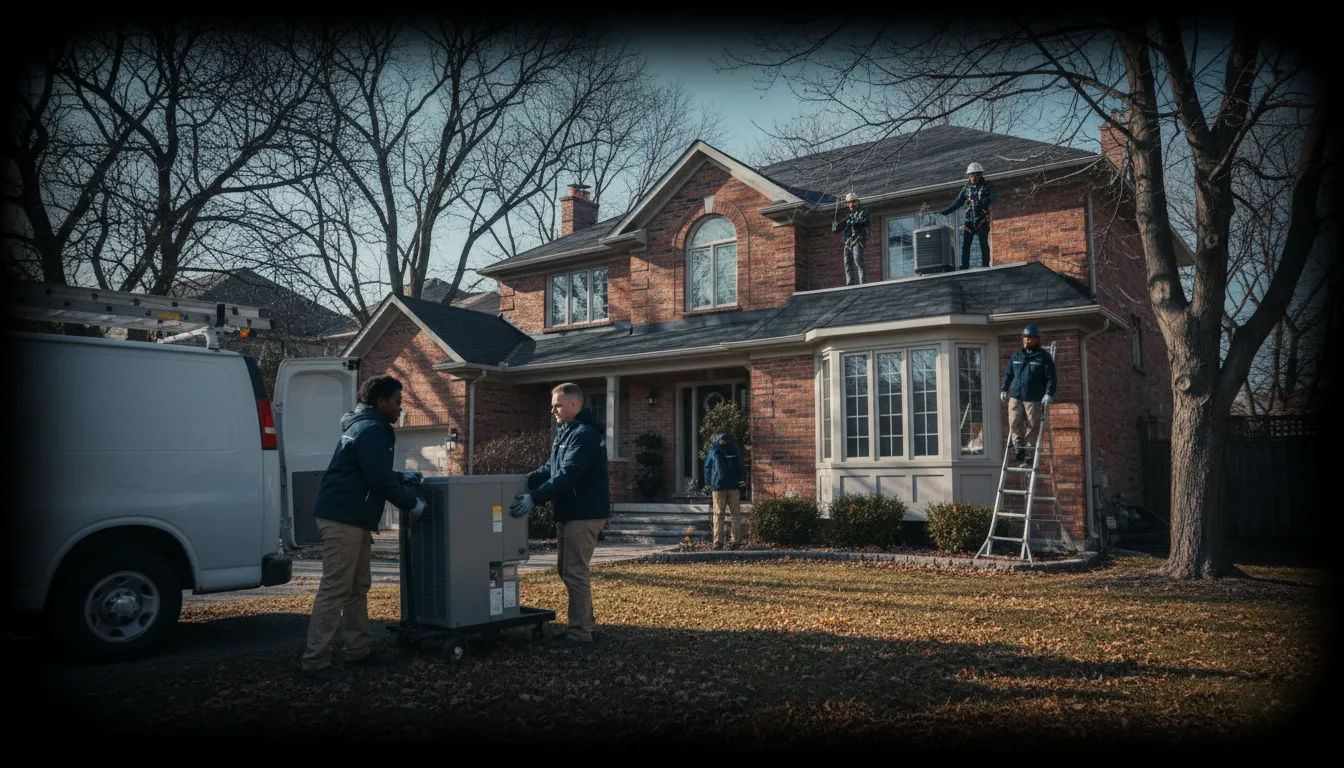
Furnace acting up or not heating at all?
Email us the symptoms and we'll schedule a diagnostic visit.
Email Us for a Free EstimateLocal conditions matter — email us for same-day service.
Fall home-service conditions in Toronto, ON
Fall around Toronto, ON is the season to prepare your home before winter sets in.
Proudly Serving Toronto, ON
Local, on-time service throughout Toronto and the surrounding area.